The Difference Between kW and kVA
What is kW?
- kW = kilowatts
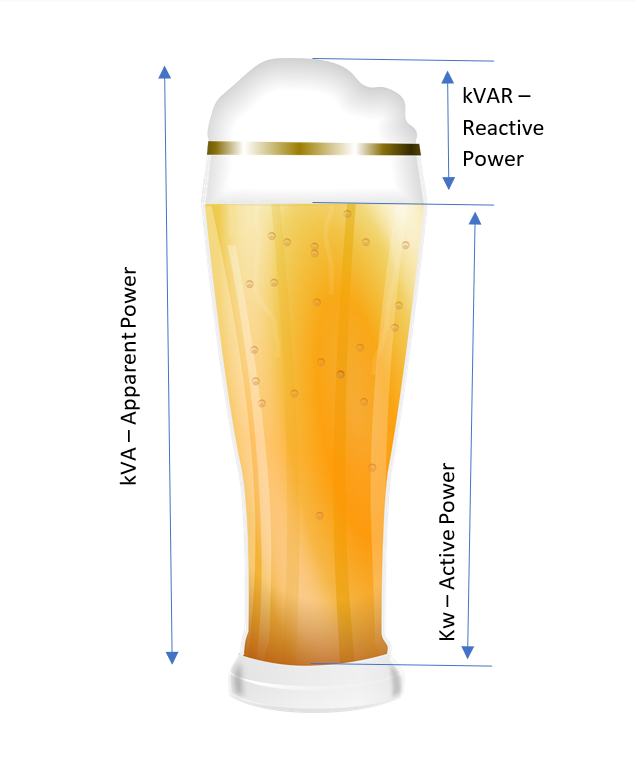
- It measures real power – the actual power that does useful work (like running a motor, lighting a bulb).
- It’s the power you pay for on your electricity bill.
- Formula:
kW=Voltage×Current×Power Factor/1000
What is kVA?
- kVA = kilovolt-amperes
- It measures apparent power – the total power flowing in a system, both useful and wasted (like heat or magnetic losses).
- It includes both real power (kW) and reactive power (kVAR).
- Formula:
kVA=Voltage×Current/1000
What is the Main Function of AVR?
- Voltage Stabilization
Keeps output voltage within a safe and steady range, even if the input voltage varies. - Protection of Electrical Equipment
Prevents damage to sensitive devices (like computers, appliances, generators, etc.) from:- Over-voltage
- Under-voltage
- Surges/spikes
- Improved Performance of Devices
Many machines (especially motors and electronics) work better with stable voltage. - Used in Generators
In generators, AVR controls the excitation system to regulate output voltage and maintain stability, especially with changing loads.